Aquascaping Styles: Nature, Iwagumi, Dutch and Biotope
An aquarium can be a box with fish in it or a composition that happens to be underwater. The difference is rarely money — it is a handful of decisions about where things go, made before the water is added.
Nature style
Popularised by Takashi Amano, this approach imitates terrestrial landscapes: a hillside, a forest floor, a river bank, shrunk to fit glass. Driftwood provides the skeleton, plants soften it, and the layout is usually asymmetric with a clear focal point placed off centre. It is the most forgiving style because growth blurs small errors.
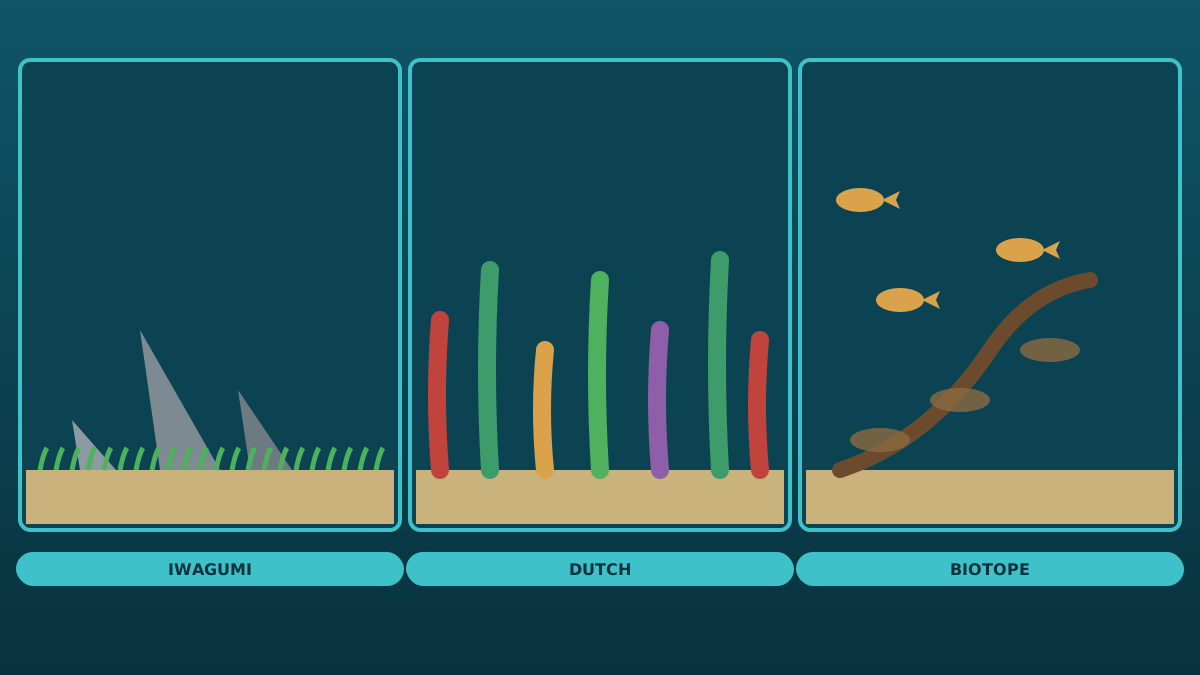
Iwagumi
Stone only, usually three, five or seven pieces of the same rock type, with one dominant stone and the rest supporting it. Carpet plants cover the substrate and nothing else competes for attention. Beautiful and brutal: with no wood or tall plants to hide behind, every misplaced angle stays visible for the life of the tank, and carpets demand strong light and steady maintenance.
Dutch style
No hardscape at all. The composition is built entirely from plants arranged in terraces and streets of contrasting colour, leaf size and texture, trimmed to hold their shape. Dutch tanks look like flower beds and are maintained like them — heavy trimming, deliberate replanting, and no room for a plant that has stopped performing.
Biotope
Instead of imitating art, a biotope imitates a specific place: a South American blackwater stream, a Southeast Asian peat swamp, a rocky African lake shore. Substrate, wood, leaf litter, water parameters and species all come from the same region. It is the most educational style and often the easiest on the fish, because everything in the tank evolved together.
Practical starting points
- Place the focal point off centre, roughly a third of the way in.
- Use odd numbers of stones and pieces of wood; even numbers look arranged.
- Slope the substrate deeper at the back — it creates depth that a flat bed never gives.
- Choose one main plant and repeat it. Collections of single specimens read as clutter.
Sketch the layout on paper first, then build it dry in the empty tank and live with it for a day before filling. Rearranging stones in air is a great deal easier than doing it in forty litres of cloudy water.
Why most first aquascapes fail, and it is not the layout
A layout that looks right on day one and is unrecognisable by week six usually failed on maintenance load rather than design. Three causes account for most of it.
The first is mismatched growth rates. A carpet plant that needs high light next to a slow rhizome plant that burns under it produces algae on one and a bald patch on the other. Choosing plants with similar light and nutrient demands matters more than choosing plants that look good together in a photograph.
The second is planting density. New scapes are usually planted too sparsely, which leaves nutrients and light for algae. Heavy planting from the start, with fast-growing stems that can be removed later, is the standard way to get through the first two months.
The third is expecting the photograph. Competition scapes are photographed at a single moment, often trimmed the day before and populated for the shot. A tank that looks like that permanently is a tank with an owner doing several hours of work a week. Choosing a style you can maintain is a design decision, and it is the one beginners skip.
Frequently Asked Questions
What is Iwagumi?
A minimalist Japanese style built around an odd number of stones, usually with a single carpeting plant. It looks simple and is unforgiving, because every stone position is visible.
What is the rule of thirds in aquascaping?
Placing the main focal point about a third of the way across the tank rather than dead centre. Off-centre layouts read as more natural to the eye.
Which style is easiest for a beginner?
A nature-style layout with hardy stem plants and driftwood. It hides mistakes, grows in quickly and tolerates uneven trimming.
Do I need injected CO2 to have a planted tank?
No. A large number of species grow well without it, including most rhizome and many stem plants, provided light is moderate and not pushed. CO2 becomes necessary mainly for demanding carpets and high-light layouts, and it raises the difficulty of everything else at the same time.
How long before a new aquascape looks settled?
Two to three months is typical. The first weeks include melting of newly planted stock, an algae phase and visible gaps. Judging a scape before month three is judging a construction site.
Sources & Further Reading
- Aquatic Gardeners Association — www.aquatic-gardeners.org
- Royal Botanic Gardens, Kew — aquatic plant science — www.kew.org
Last updated: 11 August 2026